
When interpreting goes well, it’s almost invisible. People speak, others listen, and the meeting moves forward with clarity and momentum. When it goes badly – think muffled audio, crosstalk, dropouts – everyone notices and it’s a source of all-round frustration. The difference isn’t a question of magic; it’s all about planning and using the right interpreting equipment. In this guide, we’ll discover the choices that matter the most, from booths and consoles to headsets and mics, so you can match equipment to the setting and set up your interpreters to succeed.
Start with the mode: simultaneous or consecutive?
Everything stems from the interpreting mode you choose. Simultaneous interpreting happens in real time: interpreters listen and speak at the same time, often from a booth, feeding separate language channels to the audience’s headsets. This form of interpretation is the backbone of large, multilingual events and is the usual choice for conferences, multi-stakeholder briefings, and global town halls.
Meanwhile, in consecutive interpreting, the speakers and interpreters alternate, with a short pause in between. This allows the interpreters to reformulate the original message in the target language, sometimes after taking some short notes. Consecutive interpreting works best for smaller events such as those with just a handful of participants, one-to-one consultations, or meetings involving a lot of scientific or specific vocabulary. Your choice of mode determines whether you’ll need interpreting equipment – full booths and multi-channel receivers or a lighter, more portable set of equipment. Consecutive interpretation does not typically require any equipment aside from a sound system that usually comes with any venue.
Translation booths: The starting point for clarity
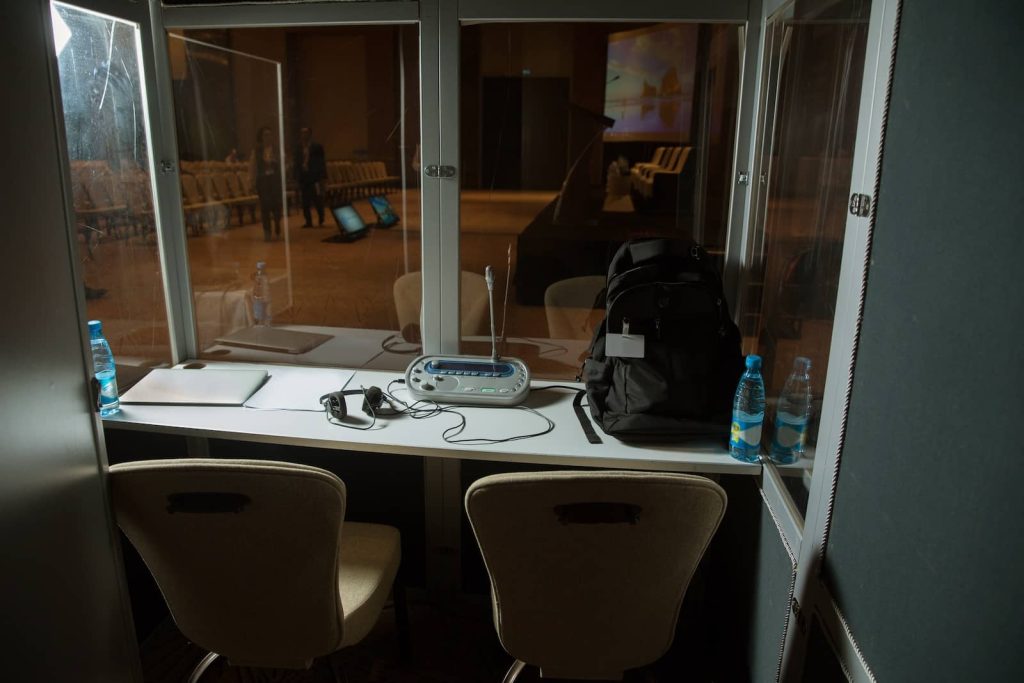
For simultaneous work, a translation booth is far more than a box; it’s the source of intelligible output. There are two main choices here:
- Tabletop booths are quick to deploy and good for smaller spaces, but they don’t fully isolate sound. However, they are a much more portable option and can be set up easily in small spaces.
- Full-size modular booths provide proper acoustic separation, ventilation, and sightlines. This option ensures the interpreters’ voices are kept out of the room and creates the most comfortable working conditions for the interpreters involved.
Wherever you position the booth, it’s important to make sure interpreters can see faces and slides directly, or via dedicated monitors, and that the booth is far enough from PA speakers to avoid echo. Plus, good lighting and quiet fans matter more than you’d think during a long, concentration-intensive day.
Consoles and channels: control at the fingertips
At the heart of simultaneous interpreting equipment is the console itself – the device that handles audio in/out, volume controls, and channel selection. It’s where interpreters adjust what they hear, manage what they say, and keep track of which language channel they’re on. When consoles are configured properly, interpreters can focus on meaning and tone instead of fighting with the technology.
Distributing the audio: infrared or RF?
How you deliver the interpreted audio to listeners depends on various factors, including the venue itself, the confidentiality of the material, and the risk of interference.
Infrared (IR) keeps the signal inside the room because light doesn’t pass through walls. It’s naturally private and excellent for confidential meetings. It does require careful placement of emitters to “paint” the audience area, and direct sunlight can weaken performance.
Radio frequency (RF) offers range and fewer line-of-sight constraints – great for large rooms or multiroom venues. It’s robust when frequencies are managed well.
Headsets and receivers: comfort is key
The listener’s experience begins in his/her ears. Over-ear headsets isolate noise and are kinder over long sessions; in-ear buds are lighter and discreet but can let in room sound. Well-labeled controls and volume wheels can lead to fewer interruptions and requests for tech support mid-presentation. Accessibility is important, too. For example, neck loops for hearing aids, a stash of spare foam covers for hygiene purposes, and even a few smaller headsets just in case can all make a big difference.
For the interpreters themselves, broadcast-style headsets with a noise-rejecting boom mic are worth every penny: they reduce booth noise and keep listening fatigue to a minimum.
Microphones: the overlooked deal-breaker
No interpreting system can fix a bad microphone and/or sound system at the source. Podium goosenecks are excellent for speeches delivered at a lectern. They deliver predictable, consistent sound and there’s minimal risk of clothing rustles or other unwanted distractions. This option is also useful when recording is taking place, as noise levels are generally kept stable. The gooseneck mic also works well with push-to-talk and conference systems, with a clear “on/off” indicator. These factors also benefit interpreters, who can hear each speaker clearly.
Lavalier (sometimes called lapel) mics, meanwhile, work for presenters who want to keep moving, for example by walking around the stage or stepping into the audience. They are also convenient for trainers who use flipcharts, props, or live demos, and other presenters who simply need to keep their hands free, whether for notes or gesturing. Lavalier mics create a clean look – there’s nothing to remember to switch on or off or pass around. However, they do need careful placement and the level needs to be set just right; clothing noise, jewelry, or even long hair can result in unwanted sounds.
Mixers, routing, and recording: tying it all together
Behind the scenes, your audio team should set up the routing so interpreters hear the original speaker clearly, but not their own translated audio coming back as a distracting echo. This might sound like a small detail, but it makes a huge difference to how smoothly they can work and how natural the interpreted speech sounds to your audience. When that feed is clean and uncomplicated, interpreters can focus on meaning and tone, instead of fighting against their own delayed voice in their ears. It’s the kind of fine-tuning participants never see, but interpreters feel.
Interpreting equipment from Capital Linguists
No two multilingual events are exactly alike, which is why Capital Linguists starts with your format rather than a fixed package. We help you decide whether you need full booths or mobile solutions, gooseneck or lavalier mics, infrared or RF transmission systems, and the right headsets and consoles. We’ll make sure your interpreting equipment aligns with the needs of your event’s participants as well as its linguists. Plus, we operate across the United States and Canada, from Los Angeles to New York – and everywhere in between! So, to discuss the scope of your next multilingual gathering, get in touch with Capital Linguists and we’ll help you build the right interpreting setup from the ground up.
