
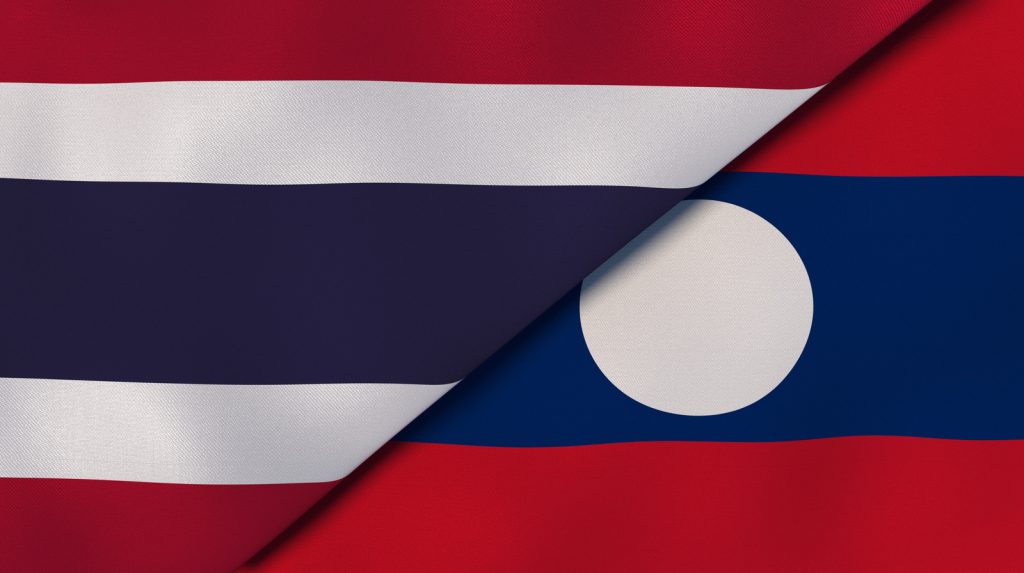
Washington, DC, may be best known for its embassies, think tanks, and government buildings, but a closer look reveals a city – and its organizations – that is powered by an extraordinary diversity of languages. Among them are Thai and Lao. Although they likely don’t appear in the top ten list of languages that spring to mind when thinking about the US capital, both are essential for government projects, nonprofit initiatives, and many international partnerships that extend far beyond the city.
In this blog, we’ll examine why Thai and Lao interpreters play such a crucial role within NGOs and governmental organizations, and why the demand for these skills continues to grow.
Why NGOs and governmental agencies?
Local service providers such as NGOs and community organizations are often the first to notice language gaps. Community health teams, school outreach programs, or legal-aid clinics repeatedly ask for Thai and Lao interpreters because the need for these languages often becomes apparent on the ground. This might be a parent-teacher meeting, an appointment at a clinic, or a cultural event. In other words, demand is driven as much by neighborhoods and families as by embassies and conferences – although it still exists there, too.
At the highest levels of government, interpreting looks very different from grassroots work; in the corridors of power, it can become a security-critical responsibility. Interpreters who work in intelligence briefings, defense talks, or any other meetings involving classified information must hold security clearance, maintain discretion, and be comfortable with sensitive terminology.
Thailand and Laos: Jewels of Southeast Asia
Geographically and culturally, the two countries couldn’t be more intriguing: Thailand’s long coastline, chaotic cities, and cool northern highlands produce a wide range of regional speech, while Laos’ Mekong communities, market towns, and remote highland villages tend to preserve older expressions and local turns of phrase. Someone from Thailand’s Chiang Mai will use vocabulary and polite forms that sound different to a Bangkok speaker, and a Lao speaker from Luang Prabang or a riverside village may favor idioms and metaphors that are rarely heard in the capital.
Local life, such as rice-growing cycles, seasonal festivals, and even the kinds of markets people visit, shapes the way ideas are expressed. This means the same concept can be articulated quite differently in one valley compared to the next. And for Lao and Thai interpreters, this means they need to know more than just the standard forms; it means paying close attention to markers of region, age, and social role, and reflecting them in English.
The unique challenges facing Thai interpreters
The practical realities of Thai-to-English interpreting are deceptively tricky. Thai script and historic borrowings from Pali and Sanskrit give it a formal register that English doesn’t mirror easily, and the fine-tone system means pronunciation errors change meaning. This is particularly important for Thai interpretation (as opposed to Thai translation), where there is ample scope for serious misunderstandings.
For example, in a setting such as a medical appointment or high-level policy meeting, Thai interpreters frequently switch between a literal translation and functional clarity – in other words, sometimes they will render the wording exactly, while other times paraphrasing is essential to allow the listener to understand the true intent. Good interpreters know when to stay literal and when to smooth the sentence into idiomatic English.
What about the Lao interpreter?
To the untrained ear, Lao can sound deceptively straightforward, but beneath that calm surface lie plenty of opportunities for meaning to slip during interpretation. Like Thai, Lao is also tonal, which means that pitch is crucial. However, Lao has its own set of tones and idioms, and tiny changes in phrasing or emphasis can quickly transform a sentence from neutral to something emotionally loaded.
At first glance, Lao’s written script looks similar to Thai, yet the words, rhythms, and expressions are often different enough that assuming one speaker can stand in for the other is a recipe for disaster.
In practice, Lao interpreters often have to take account of regional differences, as well as situational details. A family from a village along the Mekong River may use vocabulary that would be unfamiliar to a Vientiane resident, and community interpreters in particular need to be attuned to these local turns of phrase. In settings like medical appointments or social-service meetings, a Lao interpreter will frequently need to expand a short, context-rich expression into a fuller English explanation to fill in the gaps for the other participants. Meanwhile, in higher-level government or NGO briefings, the interpreter must retain that all-important subtlety, without letting the message become vague.
With Lao interpretation, there’s also the issue of supply and demand, as fewer certified Lao interpreters are available than for more commonly requested languages (such as Mandarin, Spanish, or French).
Expert Lao and Thai interpreters from Capital Linguists
Capital Linguists supplies vetted Thai and Lao interpreters who combine fluency with sector experience. Whether it’s a high-level delegation or a community health clinic, our pros handle the language and the context, so you don’t have to worry.
